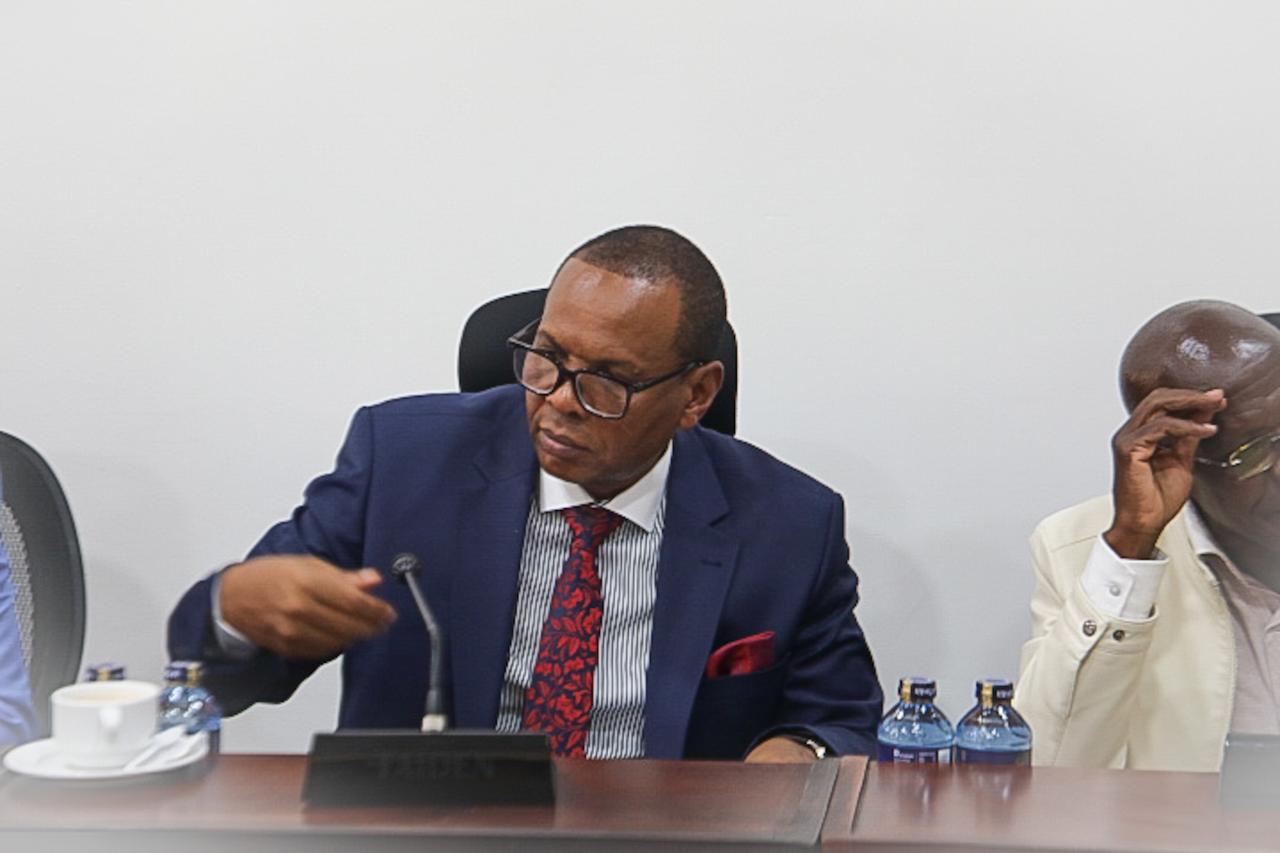
Tana River Senator Danson Mungatana has called for the creation of strategic oil reserves, warning that Kenya lacks adequate fuel storage to meet international standards.
He said the country depends too heavily on commercial stocks and is exposed to global shocks. He plans to table a Senate motion to push for infrastructure and budget allocations.
On his X post, formerly Twitter, the UDA Senator, who is a Member of the Senate Energy Committee, said recent inquiries had revealed that Kenya does not hold strategic petroleum reserves in line with international energy security requirements.
“As a Member of the Senate Energy Committee, it has come to light during inquiry that contrary to the global requirements, Kenya does not have strategic oil reserves,” Mungatana said.
The Senator noted that countries belonging to the International Energy Agency (IEA), including Kenya, are expected to maintain fuel reserves equivalent to at least 90 days of net oil imports, which translates to roughly three months of supply.
“Members of the International Energy Agency (IEA), Kenya being one, are required to have strategic reserves of at least 90 days of net import oil reserves,” he said.
Mungatana compared the proposed system to Kenya’s existing food security framework, where the National Cereals and Produce Board (NCPB) maintains grain reserves to cushion the country against shortages caused by drought or crop failure.
“Kenya has food reserves managed by National Cereals and Produce Board (NCPB) to cushion the nation against hunger due to unexpected crop failure or other factors,” he said.
The senator warned that the current reliance on commercial oil stocks held by private marketers is inadequate and leaves the country vulnerable to global supply disruptions.
“The current situation where we are depending on the commercial stock put in storage tanks by oil marketers is not acceptable,” he said.
Mungatana's remarks comes amid Kenya’s energy sector being under strain from rising global oil prices, supply disruptions and structural weaknesses in petroleum storage.
The country relies entirely on imported fuel, mainly from Gulf suppliers, exposing it to external shocks such as Middle East conflicts that have recently pushed up pump prices and triggered shortages in Nairobi and other towns.
A major concern is the absence of strategic petroleum reserves, whilst energy experts warn Kenya lacks sufficient emergency stockpiles, unlike international standards that recommend about 90 days of fuel cover, leaving the country vulnerable to sudden supply shocks and price volatility.
Instead, Kenya relies on commercial stocks held by marketers, which are often insufficient during crises.
Reports indicate Kenya Pipeline Company currently holds only short-term buffers of around 20 days, far below recommended energy security levels.
This has fueled calls for the revival or expansion of a national strategic reserve, once planned under the National Oil Corporation of Kenya.
At the same time, regulatory bodies like EPRA face pressure balancing affordability and market stability amid fluctuating global crude prices, currency depreciation and growing demand in transport and industry sectors.
Energy experts warn that without long-term investment in storage infrastructure and diversification, Kenya’s fuel security risks remain high.
The Senator further cautioned that such limited reserves would be insufficient in the event of major international conflicts or supply chain disruptions, citing scenarios such as geopolitical tensions affecting global oil supply.
“At any rate, the quantities are not sufficient to cover the nation against eventualities like USA/Iran war for at least 90 days,” he said.
Mungatana also pointed to the National Oil Corporation of Kenya (NOCK), noting that the state-owned company was originally intended to play a key role in managing national fuel security but has not fully delivered on this mandate.
“National Oil Company of Kenya (NOCK) was a fully Government-owned company that was supposed to carry out this function amongst others, failed Kenyans,” he said.
He stressed that Kenya cannot afford to remain exposed to external shocks in the energy sector, warning that failure to act could leave the country vulnerable during global crises.
“However, we cannot as a nation keep quiet and leave ourselves open to any bad situations,” he said.
The senator announced that he will move a motion in the Senate to compel the government to develop infrastructure and allocate funding for the establishment of strategic oil reserves.
“I will file a motion to make the Government prepare necessary infrastructure readiness and budget for this purpose,” he said.
His proposal comes amid growing global concerns over energy security, with many countries reassessing their fuel storage capacity in response to geopolitical instability and fluctuating oil markets.
If adopted, the motion could trigger policy discussions on expanding Kenya’s energy storage infrastructure and reviewing the role of state agencies in managing strategic reserves.
The proposal also places renewed attention on the country’s preparedness for supply disruptions, particularly in light of its heavy dependence on imported petroleum products.































Comments
Sign in with Google to comment, reply, and like comments.
Continue with Google